Lightfoot's Commentary on the Gospels from the Talmud and Hebraica
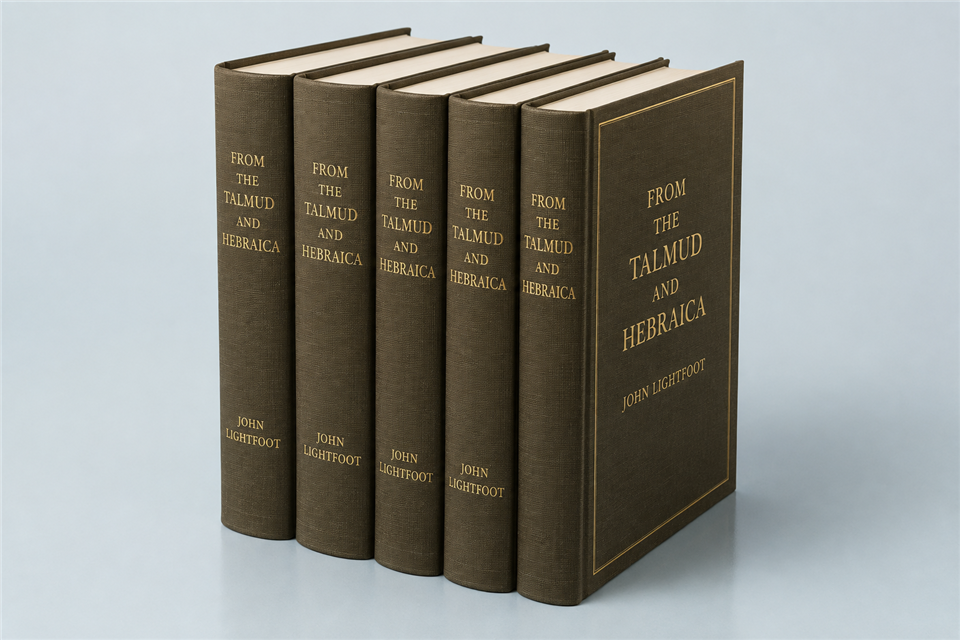
John Lightfoot (1602–1675), Master of Catharine Hall, Cambridge, and a member of the Westminster Assembly, was among the first Christian scholars to make systematic use of the Talmud and the rabbinic writings for understanding the New Testament. His Horae Hebraicae et Talmudicae, or "Hebrew and Talmudical Exercitations," was written in Latin and published in parts: Matthew in 1658, Mark in 1663, John in 1671, and Luke in 1674. The English translation is usually titled A Commentary on the New Testament from the Talmud and Hebraica.
The SwordSearcher module contains Lightfoot's work on the four Gospels, 850 entries on the verses he chose to treat. This is not a verse-by-verse exposition. Lightfoot's purpose was narrower: to show what the words, customs, places, and arguments in the Gospels meant to the Jews who first heard them, by setting them beside the Jewish sources. When Jesus speaks of phylacteries, the second mile, the hem of the garment, or the traditions of the elders, Lightfoot tells you what the rabbis said about them. His note on John 3:1, for instance, retells the Talmud's stories of Nicodemus Ben Gorion, counted among the wealthiest men of Jerusalem, and leaves the reader to judge whether he is the man in the Gospel.
One caution is needed. The Talmud and the other rabbinic collections were compiled centuries after the Gospels were written. They preserve much older tradition, and Lightfoot used them with great learning, but not everything in them describes the Judaism of Jesus' day, and his comparisons should be read as background, not as contemporary records.
He was also a careful theologian, as his opening note on John's Gospel shows:
[In the beginning was the Word.] In the beginning; in the same sense with Bereshith, In the beginning, in the history of the creation, Ge 1:1. For the evangelist proposeth this to himself, viz. to shew how that, by the Word, by which the creation was perfected, the redemption was perfected also: That the second person in the holy Trinity, in the fulness of time, became our Redeemer, as in the beginning of time he had been our Maker.
Lightfoot's learning was borrowed by nearly every commentator who came after him. John Gill in particular leaned on him heavily, and readers of Gill's notes on the Gospels will recognize much of Lightfoot behind them. Having the original in the library lets you go to the source. Because the notes are on selected verses, the easiest way to use them is to keep the Lightfoot tab open while reading a Gospel and browse with the next and previous entry buttons.
This text is part of the SwordSearcher Deluxe Study Library.
Module type: Commentary
Module abbreviation: Lightfoot

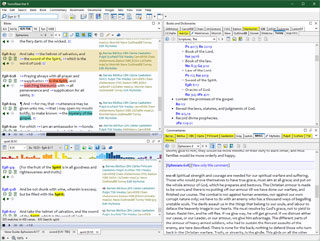
The Deluxe library includes hundreds of volumes. Discover how fast, convenient, and powerful software is compared to mere online study tools.
